Cultured pearls and saltwater pearls: differences, similarities and how to identify them
www.photographe-book-paris.com
Introduction: First, why do we distinguish saltwater pearls from freshwater pearls? These pearls differ from one another from the way they form to their final appearance. The differences are directly linked to their surroundings — the water — and to their hosts, mussels or oysters. They are the result of a defence mechanism triggered when a mollusc detects an intrusion within its body.
The intruder is then covered with successive layers of nacre, whose thickness and regularity determine the pearl's value. It is also important to know that the vast majority of both types are cultured pearls: pearls formed with human assistance by implanting a nucleus in the flesh of this rather unusual animal, appreciated in many different ways.
1) Pearls as a whole:
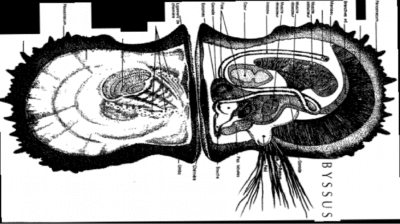
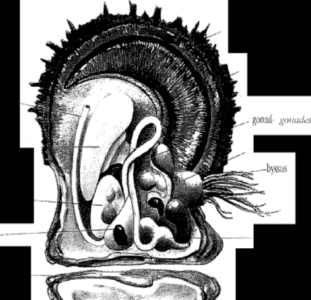
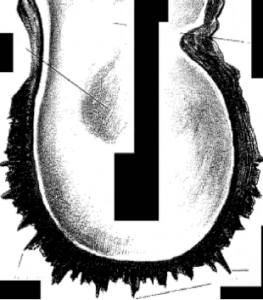
‘Pearl oyster’ is a general expression referring to a group of bivalve mollusc species capable of secreting pearls. Pearl oysters are actually Pteridae rather than Ostreidae, the family of edible oysters also known commercially as flat or cupped oysters. Pteridae have a ‘foot’ and a ‘byssus’, whereas Ostreidae have neither. These two mollusc families differ in shape and shell composition. Ostreidae shells consist of calcite, with a rhombohedral system, while Ptenidae shells contain calcite and aragonite, with an orthorhombic system.
calcite aragonite
Calcite and aragonite are two crystalline forms of calcium carbonate, CaCO3. It should also be noted that any pearls formed by Ostreidae consist of calcite, whereas those of Pteriidae have appreciable quality because they consist of aragonite.
All nacre-producing molluscs can secrete natural pearls. The initial condition is the accidental entry of a foreign body — a grain of sand, a worm larva or a large artificial bead — into the shell. Some foreign bodies are expelled, but those that remain are neutralised in a nacre pocket formed by multiplying mantle cells.
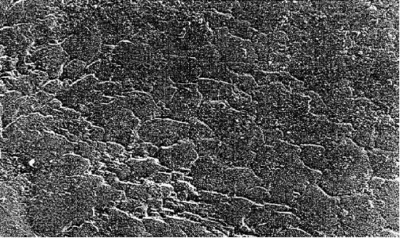
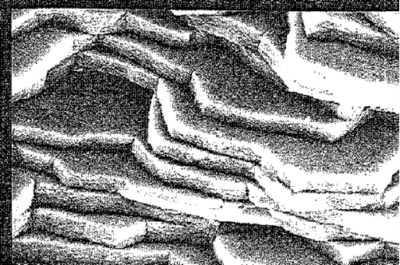
This sac produces concentric layers of nacre on its inner surfaces, and that nacre forms the pearl. Nacre and pearl therefore have very similar compositions, both originating in mantle cells. Shell nacre, however, consists of flat layers, whereas pearls consist of lamellar layers built up around the initial core. See photographs.
It accounts for 99% of the natural pearls on the market. Nacre also starts appearing on the nucleus after one or two months, averaging 48 to 50 days after the pearl oyster has been grafted. Numerous highly precise electron-microscope analyses suggest that the nacre layer grows linearly, constantly and regularly, at least until the thirteenth or fourteenth month.
After that, the oyster begins to tire and gradually reduces its nacre production. This does not support the practice of re-grafting, which essentially involves inserting a new nucleus into the oyster immediately after removing its cultured pearl. A layer of nacre averages half a micron in thickness: 2,000 layers therefore give a thickness of one millimetre, at a rate of eight layers a day, or one every three hours. Here is a striking example for Polynesian nacre:
-13-day pearl = 0.4 mm
-258-day pearl = 1.74 mm
-395-day pearl = 2.57 mm
A pearl aged 13 to 14 months contains approximately 4,500 layers of nacre. A two-year-old pearl contains around 6,000 layers of nacre!!!
The Persian Gulf and Red Sea have been major producers of natural pearls since antiquity. Productive pearl-oyster fisheries are also possible, though at long intervals, in the strait between India and Ceylon — the Gulf of Mannar. Natural pearl production has also been organised through diving off Venezuela, in the gulfs of California and Panama, in northern Australia and in the Tuamotu atolls of French Polynesia.
2- Saltwater pearls:
Traditionally, most pearls were collected from saltwater oysters living in the Persian Gulf, the Red Sea and the coastal waters of India and Japan, although China has harvested freshwater pearls for many centuries.
Saltwater pearls are more brilliant — the term used is lustre — than their freshwater cousins, hence their greater value.
All saltwater pearls produced today are bead-nucleated pearls. Natural pearls are still harvested in the Persian Gulf, but the yield is too small to account for significant market value, and harvested pearls rarely come from this geographical area.
Saltwater pearls are cultured by opening an oyster approximately 2 or 3 centimetres and holding it open with a piece of hardwood.A technician then uses a special instrument to make a careful incision in the oyster's gonad, its reproductive organ. A small bead, or nucleus, is inserted into this opening, with a tiny piece of mantle tissue placed behind it.The epithelial cells in this mantle tissue grow around the nucleus, producing a sac in which the pearl develops. This process is the same for all saltwater pearls cultured today.
The three most common types of saltwater pearls are Akoya pearls, Tahitian pearls and South Sea pearls, which include Australian pearls.
3- Freshwater pearls:
China has harvested freshwater pearls for centuries. The earliest records mention Chinese pearls dating from 2200 BC. The United States of America was also a major source of freshwater pearls, principally in the Mississippi, something noted when Christopher Columbus discovered the New World at the beginning of the nineteenth century.
However, increasing pollution soon significantly reduced mollusc growth, and finding pearls in molluscs is now very rare. The habitat is no longer suitable for the mussels that used to produce pearls. Freshwater pearls are slightly less brilliant than their saltwater cousins. However, they offer a wider variety of colours and shapes.
They also tend to be less expensive than their saltwater cousins; we will see why. They are said to be more popular because their purchase price is more accessible.However, because they consist entirely of nacre, they withstand wear better than their bead-nucleated saltwater cousins.
Freshwater pearls differ from other pearls because they are not bead-nucleated. In freshwater pearl farming, human intervention involves making several incisions in the oyster's mantle and placing a piece of mantle from another oyster within them, in the mollusc's fleshy tissue.
This process can be performed up to twenty-five times per mollusc, producing as many as 50 pearls at once, in the same harvest and from the same mollusc. This explains why production costs are much lower than for saltwater molluscs. The lower cost is reflected in the selling prices charged by professionals.
Once the operation is complete, farmers return the molluscs to their environment for 2 to 6 years, the period needed for the pearls to develop. The longer the period, the greater the chances of finding large-diameter pearls. Pearls produced by this cultivation method consist entirely of nacre. Without a nucleus to guide the growth process, they are consequently rarely perfectly round.
In recent years, Chinese producers have raised the standard of roundness and nacre quality. They have studied the subject so thoroughly that they have almost matched the quality of saltwater pearls. Their brilliance is such that it sometimes takes a professional to tell the difference. Yesterday's ‘rice-grain’ pearls have become well-rounded pearls reaching diameters of 16 mm, approaching South Sea pearls in size without ever matching their price.
The Japanese have also cultured freshwater pearls, notably in the famous Lake Biwa. Today, this lake is dead: its flora and fauna did not withstand microbes and, above all, excessive pollution, so production in Lake Biwa was completely halted in the 1970s.
Today, the Japanese are attempting to revive this production in another lake, ‘Lake Kasymigaura’, using a hybrid mussel, Hyriopsis Schlegeli Anadonata-plicata. Most pearls produced by this technique have large diameters and are quite unique of their kind. However, their prices reach such levels that they are currently very little exploited, and collectors generally speculate on this product.
4- Differences and similarities
a) Differences
Freshwater pearls are slightly less brilliant than their saltwater cousins, but they offer a wider variety of colours and shapes. They also tend to be less expensive. However, because they consist entirely of nacre, they withstand wear better than their bead-nucleated saltwater cousins.
Freshwater pearls occur in many shapes because, unlike bead-nucleated saltwater pearls, mantle grafting does not guide the growing pearl into a spherical shape. Freshwater pearls offer a wider variety of colours and shapes. Unlike other saltwater pearls, the grafting technique does not require the insertion of a solid nucleus: the graft is a piece of epithelial mantle tissue taken from an oyster of the same species.
Pearl production also differs considerably: freshwater molluscs can produce up to 50 pearls in a single production period of 2 to 6 years, compared with 1 to 2 pearls over 6 months to 2 years for saltwater molluscs. Freshwater pearl production is more cost-effective, making these pearls less expensive. Saltwater pearls range from 2 to 10.5 mm in diameter, compared with freshwater pearls, which range from 2 to 14 mm or even 16 mm. Freshwater pearls are harder than saltwater pearls.
b) Similarities
Both come from bivalve molluscs. Both have round or baroque shapes; both display lustre, although it is greater in saltwater pearls; and both occur in creamy white, pinkish, grey, black and golden colours. Both may form naturally or with human assistance. Both are beautiful and of gem quality, with the same stability and toughness.
5- How to identify them:
To determine this, we examine trace elements — Mn, manganese; Fe, iron; and Sr, strontium — and their X-ray fluorescence. Freshwater pearls have a much higher manganese content, which causes vivid green-yellow fluorescence.
-The tooth surface test. Imitation pearls, including Majonca, Mikasa, Mikito, Geisha and other exotic names, feel slippery against a tooth. Natural and/or cultured pearls feel gritty against its edge, producing a hard, sandy sensation that catches. Nacre consists of aragonite platelets arranged in parallel, superimposed layers. However, the tabular crystals within a layer are separated from one another. Nacre grows in pyramidal stacks, forming a staircase structure, and the crystals have decreasing diameters. This is why the edge of the tooth ‘catches’ on the pearl's surface.
Examine the appearance of the drill hole with a 10× loupe, observing nacre thickness. In cultured pearls, the boundary of the nucleus material implanted in the oyster is readily visible. Cultured pearls show a white dividing line between the nucleus and the pearl layer. Almost always, the junction is marked by a black or very dark line of conchiolin secreted by the oyster in response to irritation caused by the inserted nucleus, before it begins to secrete nacre. Nacre appears one or two months after the nucleus is implanted.
Beyond this dividing zone, no further growth zones will be visible, whereas in natural pearls they continue uninterrupted. The closer one looks towards the centre, the more yellow, brown or dark the layers often become. In natural pearls, the material has an almost uniform structure and appearance from the surface to the centre, although colour variations clearly reveal the pearl layers. Imitation pearls also often show chipped paint around the entrance to the drill hole.
– Microscopic surface analysis. Illuminate the pearl strongly from the side with incident light and examine its surface at 80× or more, up to 100×. Imitation pearls display a more or less smooth, granular surface. Natural or cultured pearls, by contrast, invariably display very clear structural lines resembling the contours on topographical maps or fingerprints.
The limitation of this test is that it cannot distinguish a natural pearl from a cultured pearl. However, it is 100% reliable because painting or imitating these surface lines and the pearl's structure at such a microscopic scale is impossible.
Electron-microscope images
Examination under strong light, or diaphanoscopy, bases its conclusion on whether the intensity of light passing through the pearl remains constant, using a lucidoscope. In a natural pearl, a pearl with an organic nucleus or one without a nucleus, light intensity remains constant. In a cultured pearl, however, when the light source's axis is parallel to the nucleus's nacre layers, light passes through much more readily. Viewed from the side opposite the light source, a bright band produces a ‘cat's-eye’ effect.
This effect disappears as soon as the pearl is rotated so that the nucleus's nacre bands are perpendicular to the light source's axis.
A practical spot test for pearls damaged by lacquer, such as certain black pearls, involves gently wiping them with cotton cloth moistened with a little hydrochloric acid solution or nitric acid solution. A dyed pearl should lose a little colour or at least leave a brown or black mark on the cotton.
The specific-gravity test gives values from 2.61 for freshwater pearls to 2.78 for Australian pearls, generally lower than those of cultured pearls, which range from 2.72 to 2.78.
As mentioned above, under ultraviolet light, freshwater pearls with their much higher manganese content emit vivid green-yellow surface fluorescence. Their saltwater counterparts give a faint glow, while cultured pearls show somewhat similar yellowish fluorescence originating inside the pearl. Dyed pearls may be inert, and plastic imitations emit strong white fluorescence.
Radiography, currently the method most widely used by identification laboratories, involves exposing a pearl to X-rays. It allows observation on three levels: radiography, the Laue pattern and luminescence. X-ray wavelengths range between 0.1 and 1 nm, allowing them to penetrate materials made up of elements with low atomic weights easily. When a broad X-ray beam passes through substances, it can produce a more or less pronounced radiograph of each, depending on the atomic weights of their constituents.
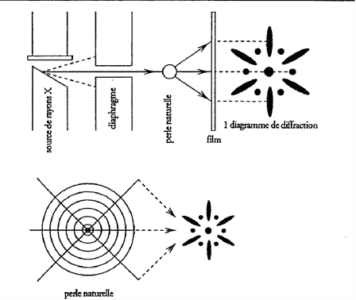
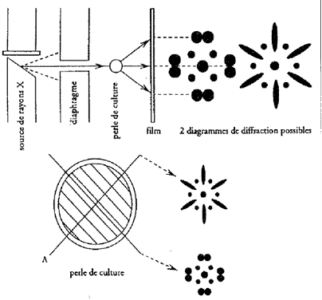
In some fairly rare cases, radiography leaves doubt about a pearl's structure. It is then subjected to the even more rigorous X-ray diffraction examination known as the Laue method. A narrow X-ray beam is scattered and diffracted by atoms. These diffracted rays are recorded on photographic film and produce a pattern typical of each type of crystal, revealing the arrangement of atoms in the structure.
The aragonite crystals that make up most of a pearl's structure diffract X-rays to produce a hexagonal pattern when the rays travel parallel to the crystals' length, and a rectangular pattern when they travel perpendicular to it. In principle, natural pearls have a concentric structure in which aragonite crystals lie perpendicular to the growth layers; they are therefore always oriented perpendicular to the pearl's surface.
X-rays directed towards the pearl's centre will therefore always travel parallel to the crystals' length and produce a hexagonal pattern.
Diffraction pattern produced by a natural pearl / Diffraction pattern produced by a cultured pearl.
In most cultured pearls, however, the nucleus consists of parallel rather than concentric layers of aragonite crystals, and the hexagonal pattern is obtained in only one direction. When X-rays travel in other directions, the resulting pattern is rectangular.
– Spectrophotometry. PINCTADA MARGARITIFERA pearls from French Polynesia display a specific absorption at 700 nanometres caused by their natural black pigments. X-ray fluorescence reveals two fluorescence peaks, at 450 nm and 620 nm, in PINCTADA MARGARITIFERA. In PINCTADA MAXIMA from the South Seas and PINCTADA FUCATA MARTENSI, known as Japanese Akoya, only the 620 nm peak is observed because these two pearl-oyster species have no porphyrins in their shells.
-Electron microscopy, whether scanning or transmission, provides detailed images of the internal structure and is decisive at this stage.
Conclusion:
Shimmering natural colours allow every kind of creative expression.Imitations, treatments and ‘widespread’ enhancements. Their substantial diameters also make these pearls into jewellery that is both noticeable and remarkable. They differ in production cost and speed, lustre and origin, but freshwater and saltwater pearls have earned their standing and can now affirm their place as gems in their own right.
Bibliography:
-Larousse des pierres précieuses.
-‘Les espèces d’huîtres perlières du genre Pinctada’. Muséum national d’Histoire naturelle, Paris.
-Courses from The Gemmological Association of Great Britain.
Necessary cookies enable the basket, account and security features to work. Depending on your choices, Google Analytics may measure website traffic, WooCommerce may measure where orders come from, and Hostinger Reach forms may load. You can refuse these optional uses and change your choice at any time.