Blog
Garnet: diversity, history and mineral brilliance


An iconic stone for mineralogists and jewellers alike, garnet is one of the most varied and fascinating minerals in the mineral kingdom. Behind a single name lies an entire family of gems, with extremely diverse compositions, colours and origins. From the deep red of almandine to the brilliant green of tsavorite, garnet offers a true mosaic of varieties that tell the geological story of the Earth.
Composition and family
The term garnet (thought to derive from the Latin granatus, ‘grainy’, referring to a pomegranate seed) describes a family of silicates with the general formula:
X₃Y₂(SiO₄)₃,
where X and Y represent different metallic elements (Fe, Mg, Mn, Ca, Al, Cr, Ti, etc.).
This cubic (isometric) structure remains constant, but the chemical composition varies according to the elements present. This explains garnet's rich colours and varied physical properties. Its average hardness is between 6.5 and 7.5 on the Mohs scale, and its specific gravity ranges from 3.4 to 4.3. Garnet has no cleavage, but a distinct conchoidal fracture, making it a strong stone ideal for cutting.
Garnets are grouped into two main series:
- Aluminium series (pyralspite)
Almandine – Fe₃Al₂(SiO₄)₃: deep red to purplish, the most common.
Pyrope – Mg₃Al₂(SiO₄)₃: blood red to pinkish red, often transparent, sometimes mixed with almandine.
Spessartite – Mn₃Al₂(SiO₄)₃: bright orange to mandarin, sometimes mixed with pyrope.
- Calcium series (ugrandite)
Grossular – Ca₃Al₂(SiO₄)₃: colourless to green, brown or honey-coloured.
Tsavorite: intense green (Cr/V), from Kenya and Tanzania.
Hessonite: orange-brown to honey-coloured (Sri Lanka, India).
Andradite – Ca₃Fe₂(SiO₄)₃: green, brown, black.
Demantoid: brilliant emerald green, highly sought-after, famous in Russia.
Uvarovite – Ca₃Cr₂(SiO₄)₃: intense emerald green, rare, often occurring as tiny crystals.
This diversity of composition gives rise to transitions and mixtures, such as pyrope–almandine, making each garnet unique.

Garnet in history and geography
Garnet has been known and used for more than 5,000 years.
Garnet jewellery has been found in Egyptian, Mycenaean and Roman tombs. The Romans called it carbunculus, a generic term for red stones.
In the Middle Ages, garnet symbolised loyalty and protection. It adorned Merovingian fibulae, Byzantine crosses and pilgrims' rings.
In the 19th century, garnets from Bohemia (today's Czech Republic) became world-famous for their deep red colour and ‘Bohemian rose’ cut. These gems later adorned jewellery typical of the Romantic and Victorian styles.
The major garnet deposits
Garnet occurs on every continent, but certain deposits stand out for the beauty or rarity of their varieties.
- Almandine and Pyrope
India (Rajasthan) and Sri Lanka: the main sources of almandine.
Mozambique and Tanzania: saturated red pyrope–almandine garnets, sometimes with fluorescence.
Madagascar: extensive production of red, pinkish and orange garnets.
United States (Arizona, Idaho, New York): historic deposits.
- Spessartite
Namibia (Marienfluss, Kunene): mandarin spessartites famous for their clarity.
Nigeria: orange-red spessartites with very high saturation.
Madagascar and Mozambique: recent production of mandarin and cognac-coloured stones.
- Grossular and Tsavorite
Kenya (Tsavo, Merelani) and Tanzania: the birthplace of tsavorite (discovered in the 1960s by Campbell Bridges).
Madagascar: green to honey-coloured grossulars with fine transparency.
Sri Lanka: orange-brown hessonites from alluvial (secondary) deposits.
- Andradite and Demantoid
Russia (Urals, Karkodinsky, Saranovskoye): the historic source of green demantoids, sought-after since the 19th century.
Namibia (Erongo): modern demantoids, very brilliant and rarely displaying the characteristic ‘horsetail’ inclusions.
Italy (Val Malenco, Val d'Ala): green and brown andradites, often collected as specimens.
- Uvarovite
Urals (Russia), Finland and Poland: small, brilliant green crystals often left on their matrix.
Garnet deposits are often associated with metamorphic rocks (schists, gneisses) or pegmatites rich in aluminium and iron. Their diversity reflects many different pressure and temperature environments.

Treatments, imitations and uses
Garnet is known as a largely untreated stone.
Unlike other gems, it is not commonly subjected to heat or irradiation treatment; neither diffusion nor filling is used in traditional jewellery.
However :
Certain lead glasses can imitate red garnets (particularly almandine and pyrope).
Garnet–glass composites existed in the 19th century (Bohemian garnet mounted on coloured glass) and are still used.
Synthetic garnets (particularly YAG, yttrium aluminium garnet, and GGG, gadolinium gallium garnet) are used in the optical industry and sometimes in costume jewellery, but their compositions differ markedly from natural garnets.
In gemmology, distinguishing between natural varieties relies not only on conventional gemmological analyses but also on analyses of chemical composition.
Garnet in contemporary jewellery
Garnet is enjoying a real revival today.
Classic reds remain timeless, but mandarin-orange and tsavorite-green gems have become highly sought-after for their vivid colours and outstanding brilliance.
Demantoid, with fire comparable to that of diamond, is particularly prized in high jewellery (Van Cleef & Arpels, Chaumet).
Tsavorite, meanwhile, is often presented as a natural alternative to emerald: more durable, untreated and brilliantly green.
Collectors appreciate rough specimens and mixed compositions (pyrope–almandine, spessartite–grossular), which tell the story of the stone's geological complexity.

An ancient gemstone with many faces
A symbol of strength, fidelity and passion, garnet has endured through the ages without ever losing its brilliance. Its chemical and chromatic richness makes it a family of gems that is both complex and accessible, at the meeting point of scientific mineralogy and artistic beauty.
Natural, durable and rarely altered by human intervention, garnet remains one of jewellery's most authentic gems.
Bibliography
- GIA – Garnet: History and Sources (2023)
- SSEF – Garnet Varieties and Identification, Facette no. 19 (2022)
- Mindat.org – Garnet Group Mineral Data (2024)
- Gemological Institute of America – Demantoid from Ural Mountains (2022)
- GemResearch Swisslab – Tsavorite from Merelani Hills, Tanzania (2023)
- Smithsonian NMNH – The Garnet Family: Diversity in Silicates (2024)
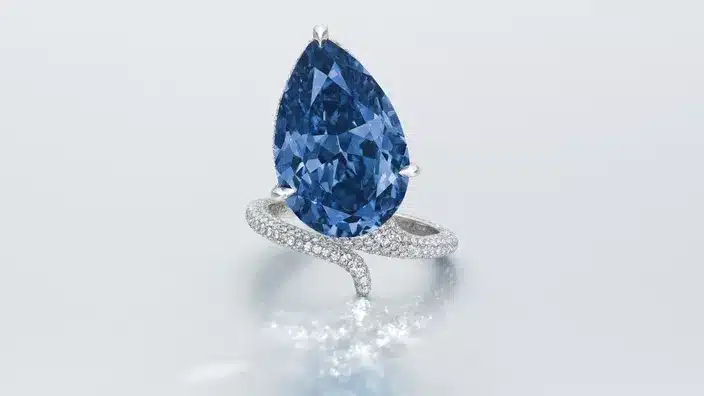


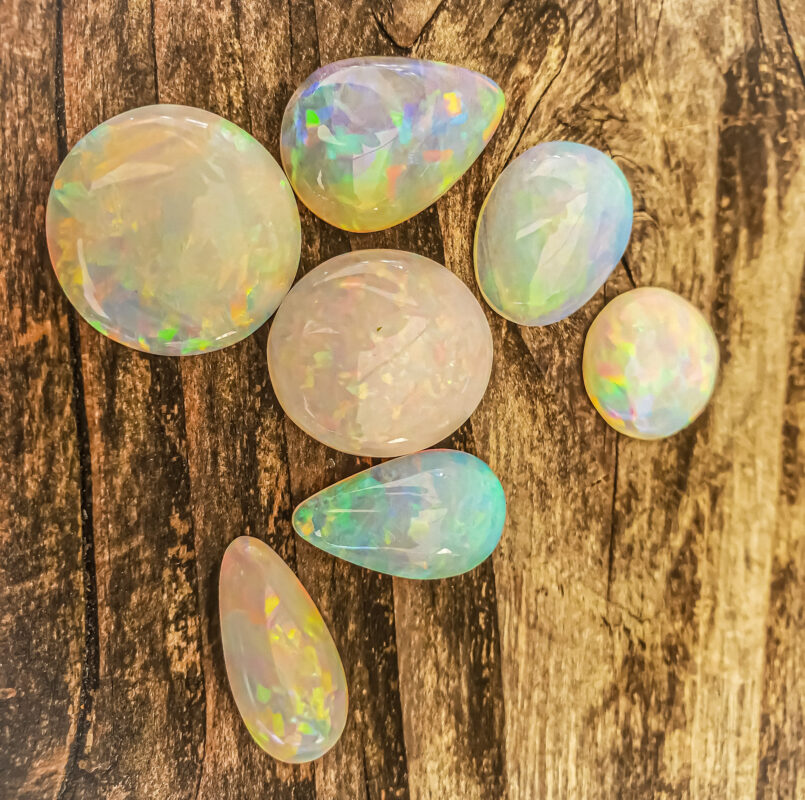


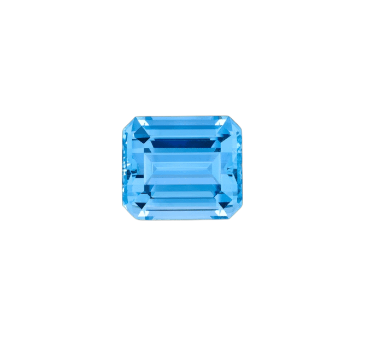


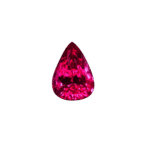
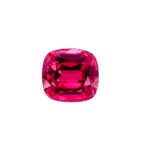
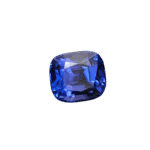
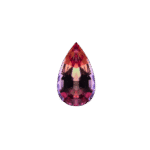
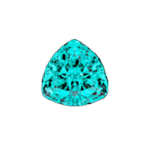
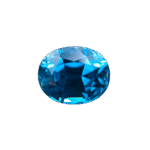

A very detailed article on garnets, covering their history, chemical composition, uses and imitations. It is enriched by photographs of beautiful specimens.