Blog
Spinel – A magnificent gem with a thousand reflections


Among the most captivating gems, yet long overlooked, spinel occupies a distinctive place. Far less well known than ruby or sapphire, it nevertheless appeals to enthusiasts and collectors through its beauty, rarity and rich palette of colours. Now rediscovered by high jewellery, spinel is establishing itself as an important gem in its own right, combining history, brilliance and authenticity.
The word spinel comes from the Latin spina, meaning ‘thorn’ or ‘point’, a direct reference to the octahedral shape of its crystals, which resemble small pointed forms, or from the Greek ‘spinther’, meaning sparkling or glittering. Its etymology remains debated, although the Latin origin is the most widely accepted.
It is a mineral belonging to the family of magnesium aluminium oxides, with the formula MgAl2O4, and is often found as well-formed crystals. Its chemical composition and crystal structure make it a durable stone sought after in jewellery. Long confused with other gems, particularly ruby, spinel was sometimes called ‘balas ruby’, an old term for red stones extracted from the mines of Balascia or Badakhshan.
Characteristics and colour palette
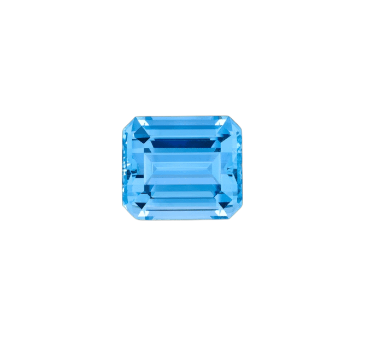
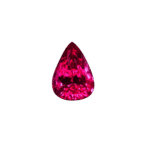
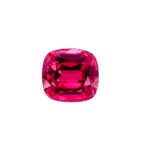
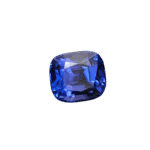
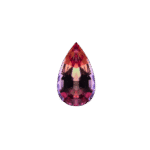
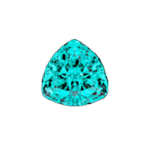
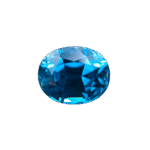
Spinel is a mineral with a vitreous lustre and a hardness of 8 on the Mohs scale, making it suitable for everyday jewellery. One of its most distinctive features is its diversity of colour. Intense, fiery red spinel is undoubtedly the most sought after and is sometimes confused with ruby. However, the stone also comes in blue, pink, violet, orange, black and even colourless forms. Among the rarest and most prized are saturated blue spinels, often from Vietnam or Sri Lanka, and vivid reds or pinks from Burma. This variety of colours is explained by impurities such as chromium, iron or cobalt.
Spinel is known as a gem that is almost always natural and untreated, one of its major advantages compared with rubies and sapphires. However, there are a few documented exceptions:
– Nickel diffusion, GIA – 14/02/2023: blue-green colour induced by nickel diffusion, with artificial healing of fractures. ‘GIA Researchers Identify New Spinel Treatment – GIA – 14/02/2023’
– Cobalt diffusion, SSEF – June 2018: a dark blue variety obtained by surface diffusion of cobalt. ‘Cobalt diffusion-treated spinel, 01/06/2018, SSEF’
– Heating, GIA, autumn 2021: low-temperature heating (600–1000 °C) is possible and alters colour or clarity; PL/Raman spectroscopy enables detection. ‘GIA Gems & Gemology, Fall 2021’
– Fracture filling, IGS – 10/06/2023: fractures are uncommon but may be stabilised by filling them with oil or resin to improve transparency. ‘Spinel Treatments and Enhancements – International Gem Society – 10/06/2023’
Synthetic spinel also exists, produced mainly by the Verneuil or flux methods since the early 20th century. These synthetic spinels can reproduce the colours and brilliance of natural stones and are mainly used in mass-market jewellery and industry.

Spinel through history
For centuries, spinel was confused with ruby and adorned royal crowns and treasures. Perhaps the most famous example is the ‘Black Prince’s Ruby’, a red stone of over 170 carats set in the British Imperial State Crown, which is actually a spinel. In India’s Mughal empires, enormous red spinels were engraved with inscriptions and worn as pendants, symbolising power and prestige. In medieval Europe, gems extracted from Central Asian mines were regarded as rubies. Only in the 19th century did modern mineralogy clearly distinguish spinel from corundum, revealing its own identity.

The major spinel deposits
Spinel occurs in several regions of the world, but certain deposits stand out for the exceptional quality of their stones.
- Burma (Myanmar): known for remarkably intense red spinels.
- Sri Lanka: renowned for its diversity of colours, particularly blue and violet spinels.
- Tanzania: a producer of highly prized pink and lavender spinels.
- Vietnam: famous for rare, saturated cobalt blue spinels.
- Afghanistan and Tajikistan: historic sources of ‘balas rubies’, still sought after today.
Each deposit has its own characteristics, shaped by the local geology and the composition of the minerals within the rock.
Spinel has attracted renewed interest on the international market in recent years. Long overshadowed by ruby and sapphire, it now draws the attention of collectors and major jewellery houses, who appreciate its natural beauty and lack of treatment.
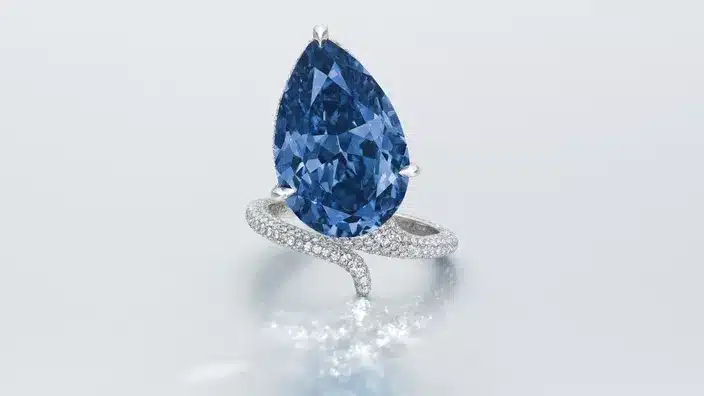
Red spinels from Burma and blue spinels from Vietnam now fetch high prices at auction, rivalling certain traditional gems. New discoveries, particularly in East Africa, are adding previously unseen colours to the market and broadening the stone’s appeal further.
In contemporary jewellery, spinel is increasingly promoted as a rare and elegant alternative to traditional precious stones, offering a wide range of creative possibilities. Understated yet fascinating, it is establishing itself as one of the most captivating gems in the mineral world. Its rich colours, brilliance and remarkable history make it an exceptional stone. Now appreciated anew by jewellers and gemstone enthusiasts, it appeals through its authenticity and unique character. At the meeting point of history and modernity, spinel fully deserves its place among the most admired gemstones and is becoming an established choice for collectors and enthusiasts.

Bibliography
- Everything You Need to Know About the Spinel Gem – American Gem Society – 02/08/2021
- Spinel Properties and Characteristics – Diamond Buzz – 19/08/2025
- Spinel History and Lore – GIA
- Spinel – Smithsonian National Museum of Natural History
- Black Prince’s Ruby – Wikipedia – 09/07/2025
- Timur Ruby – Wikipedia – 09/07/2025
- Spinel – Wikipedia – 09/05/2025
- New cobalt-bearing spinel from Lukande, Tanzania – SSEF (Facette, May 2023) – 01/05/2023
- Spinel from Afghanistan – SSEF (Facette, May 2024) – 01/05/2024
- Blue Spinel from the Luc Yen District of Vietnam – GIA Gems & Gemology – 01/03/2015
- Spinel Sources – International Gem Society (Emily Frontiere) – 10/06/2023
- Hunting for ‘Jedi’ Spinels in Mogok – GIA Gems & Gemology – 01/04/2014
- Spinel formation by sulphur-rich saline brines from Mansin (Mogok, Myanmar) – GemResearch – Swisslab AG – 01/10/2017
- Spinel: The Underrated Beauty – History and Characteristics – Geology Science – 01/01/2025 – Spinel: Properties, Uses and Virtues – Gem Gazette – 01/01/2024 – Spinel of the Great Imperial Crown – Wikipedia – 09/05/2025









Thank you for this information.
Few websites mention treatments applied to spinels.
The same goes for garnets.
Practically all are described as untreated.
I am looking for untreated stones, and unless I agree to have them analysed by an established laboratory such as the LFG
— which represents a substantial cost for a stone once considered moderately priced — I am left wanting more.
Hello! Thank you for your comment. We fully understand the concerns that gemstone treatments present for customers in the market. Unfortunately, many sellers do not mention treatments their stones may have undergone, or even quality control. Rest assured that our teams take these matters seriously and prioritise transparency. That is why, as well as offering a range of quality gemstones, we also provide identification, expert assessment and many other services. I invite you to take a look at our ‘Services’ page. Have a lovely day!