
Blog
How does a gemstone become a bespoke jewel?


A bespoke jewel can begin with a colour, a shape or a gemstone you have long wanted to wear. Between that first wish and the finished piece, several decisions connect: which gem to choose, where to place it, and how to design a setting that is comfortable to wear. The result depends as much on how well these choices work together as on the beauty of the gemstone.
Our guidance combines gemstone selection and gemmological advice with coordination between partner designers and workshops. Here are seven stages to help you understand this journey, whose precise course is defined for each project.
1. Define the project: for whom, for what and for when?
Before talking about claws or pavé, we need to talk about you. A ring worn every day, a pendant given for a birthday and jewellery for a special occasion meet different expectations. Your habits, the jewellery you already love and the details that bother you are useful starting points.
A few inspiration photographs can help define a mood: understated lines, generous volumes, geometric motifs or a vintage feel. The aim is to express what appeals to you. The overall budget and desired date are also discussed from the outset. They allow us to consider the gemstone, metal and complexity of the design together, then check feasibility with the partners involved.
2. Choose a gemstone suited to the jewel
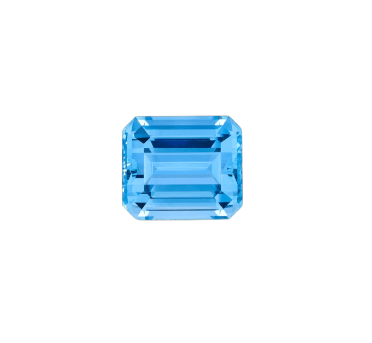
Colour often creates that first instant attraction. It is then considered alongside shape, dimensions, transparency and the way the stone catches the light. Width and height matter greatly for a setting: two gems of the same weight may require different constructions.
A gemmological examination helps us understand the gemstone and the information available about it. Its particular features, condition and known treatments should be taken into account both in the project and in its future care. If you already own a gem, its suitability for the proposed creation needs to be assessed. You can also start by browsing our gemstone selection to refine your preferences.
3. Design a setting around the gem
The design translates your wishes into proportions. It determines the position of the centre stone, the width of the band or the shape of a pendant bail, any accompanying stones and the visual presence of the metal. A view from above shows the composition; a side view helps you understand the volume.
Let us take a purely hypothetical example: an oval quartz intended for a pendant. A line of metal around the stone and a claw setting would create two different expressions. The choice would be discussed according to its appearance, dimensions and the desired style. This example illustrates a design consideration without describing an existing creation. Discover our approach to bespoke jewellery with partner designers.
4. Explore the volume in 3D when useful
Modelling can help visualise the height of the jewel, its proportions and the position of its various elements. It is particularly useful when the design includes several levels, a halo or details that are difficult to explain in a single view. Depending on the project, a physical prototype may also be appropriate.
The GIA describes digital design as work that combines proportions, manufacturing constraints and model development. However, a computer-generated image remains a representation: it replaces neither observation of the actual gemstone nor technical approval by the workshop. This stage helps refine choices and resolve construction questions before making begins.
5. Prepare and make the setting
Once the project has been defined and the terms agreed, the partner workshop can begin making the piece. The methods depend on the jewel and may include metalwork, assembled components or casting. The workshop chooses the technique according to the desired shape and the requirements of making the piece.
The metal gradually takes on the intended volume. The surfaces and areas that will hold the gemstones require adjustments and finishing. The quotation and schedule are defined for the specific creation; they depend in particular on the materials, complexity and work required. A jewel that appears simple may demand considerable attention to its proportions and joins.
6. Set the gemstone: precision and security
Setting places the gem in its mount and secures it. The points of support must match its geometry. In its quality guidance on claws, the GIA particularly emphasises the importance of a precise fit and sufficient contact between metal and stone.
The visible delicacy of a setting must therefore be considered alongside its construction needs. The shape, consistency and finish of the claws also contribute to the final appearance. If accompanying stones are planned, their arrangement requires the same care. The whole should be assessed as a complete jewel, with its balance, volumes and the demands of wear.
7. Check the jewel and explain its care
Before handover, checks focus particularly on the security of the stones, the finishing and conformity with the agreed project. Trying on the piece allows its comfort, orientation and, for a ring, fit on the finger to be assessed.
Care advice must suit the gems, any treatments and the setting. The GIA reminds us that ultrasonic cleaning is not suitable for all jewellery. Ask for an appropriate method and plan to have the setting examined over time as the piece is worn.
Would you like to understand gemstones better before choosing? Our programme of gemmology courses includes a practical identification case study on Tuesday 27 October 2026, followed by spinel on Thursday 29 October, from 8 pm to 9.30 pm.
Write PROJET to discuss your jewellery. An idea, an inspiration photograph or a gemstone to show us is enough to start the conversation.
Further reading: jewellery design and manufacturing according to the GIA, quality guidance on setting and jewellery care advice.