
Blog
Daniel Brush: when light becomes matter at L’École des Arts Joailliers

Line, light and jewellery
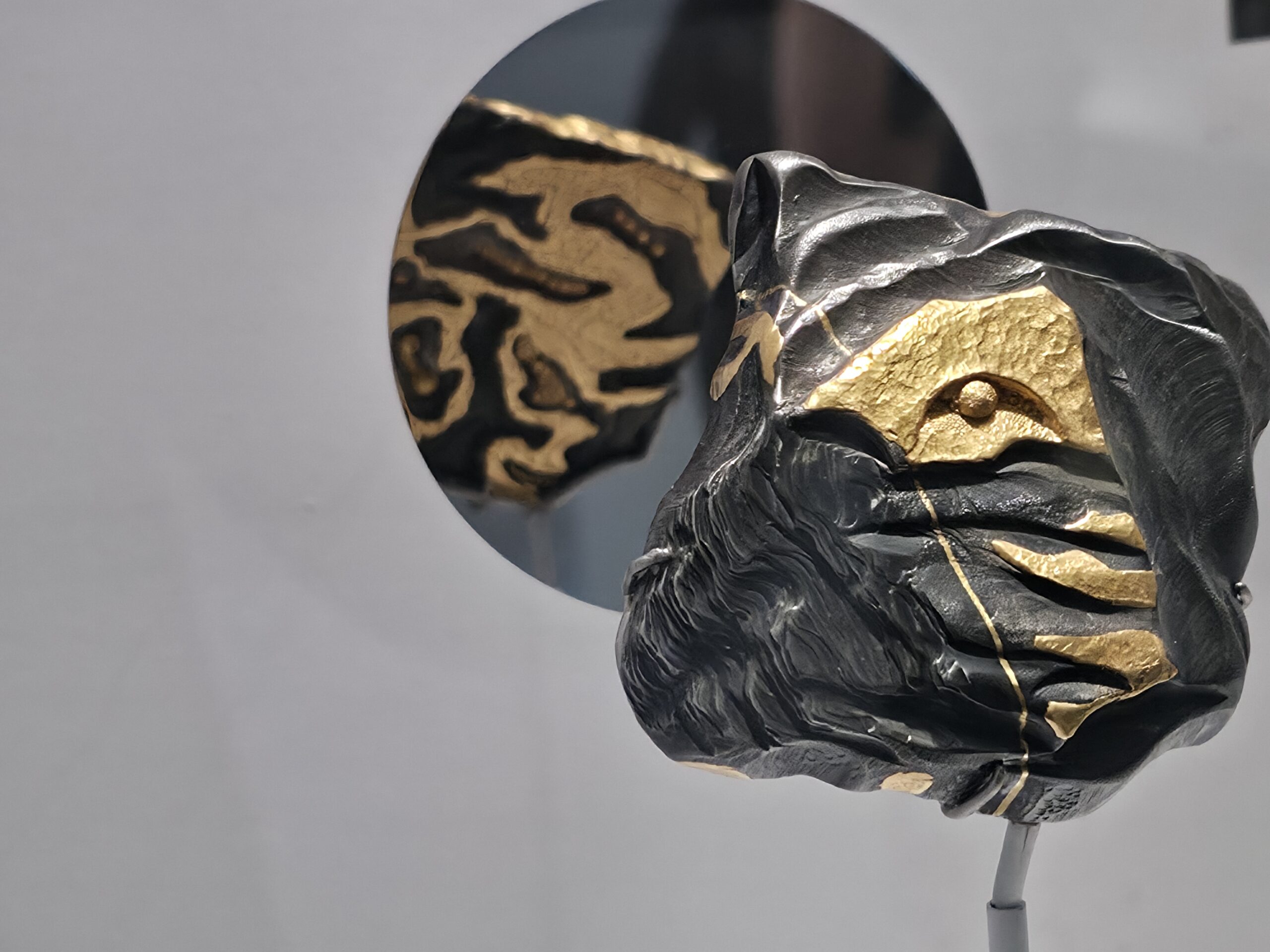
Since 8 June 2026, L'École, School of Jewelry Arts, supported by Van Cleef & Arpels, has devoted a unique exhibition to one of the 20th century's most elusive creators: Daniel Brush (1947–2022). Entitled Daniel Brush, the Art of Line and Light, this retrospective brings together more than seventy-five works—jewellery, sculptures, paintings, drawings and objects—some leaving the artist's legendary New York studio for the first time. Conceived by his wife and collaborator Olivia Brush alongside jewellery historian Vivienne Becker, the exhibition invites visitors to discover a world where the boundaries between art, craftsmanship, philosophy and jewellery disappear.
From their first steps into the salons of the Hôtel de Mercy-Argenteau, visitors understand that this is not a jewellery exhibition in the traditional sense. There is no chronology or academic route. The works converse freely with one another, just as they coexisted in the studio. A hand-engraved steel sphere responds to an ink painting, while a pure-gold bracelet seems to continue the movement of an abstract drawing. Each piece becomes a meditation, an almost philosophical reflection.
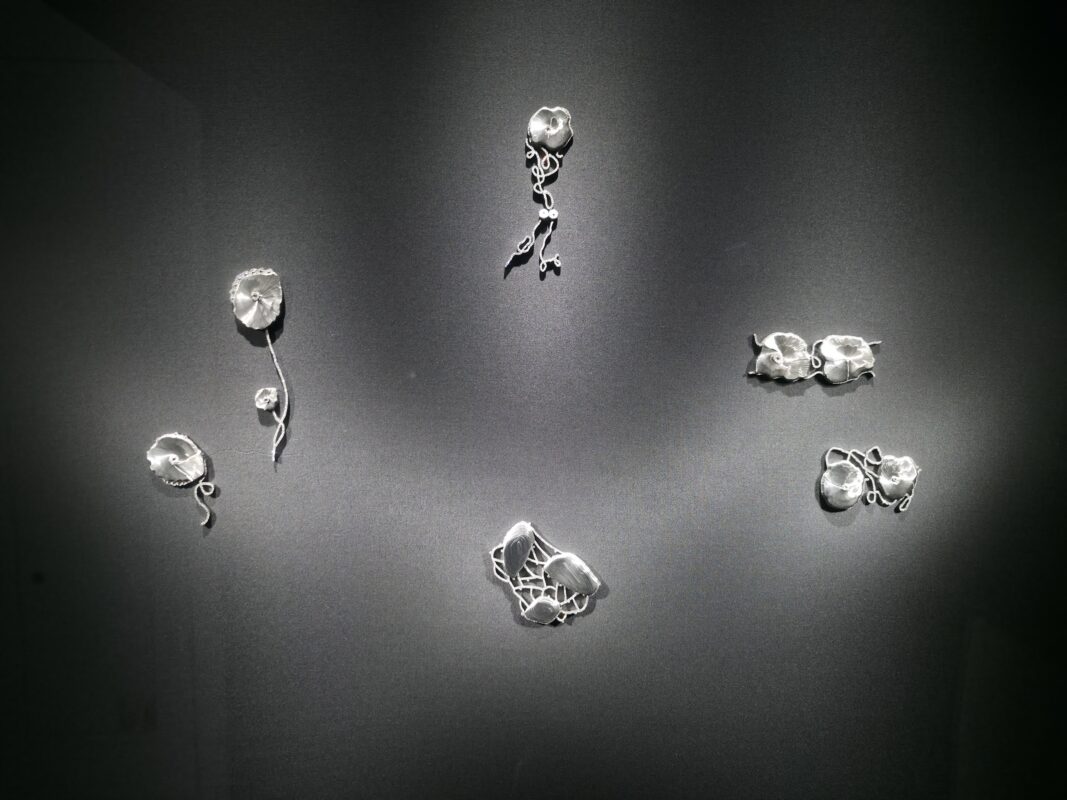
An artist who spent his life searching for the invisible
Daniel Brush never sought fame. Quite the opposite. For more than forty years, he worked in a former Manhattan loft, almost sheltered from the world, taking no commissions and surrounded by his tools and books devoted to exploring both material and abstraction. Driven by insatiable curiosity, he first trained as a painter, then became a sculptor and later a self-taught goldsmith and jeweller. He refused to be confined to one discipline or one definition of the artist.
This independence was no affectation. It was an extension of a way of life. Daniel Brush could devote several years to a single work. Not out of obsessive perfectionism, but because he believed each creation had to reach its own balance, as though gradually revealing a truth that already existed. For him, light was not simply a visual effect; it embodied a form of elevation, almost spiritual. Line, meanwhile, became a breath, an inner movement capable of connecting hand, thought and matter.
This deeply intimate dimension runs throughout the exhibition. Behind every polished surface, every finely worked engraving and every metallic reflection, one senses the hours spent in his studio. The strong presence of Olivia Brush is also felt: his wife, muse and lifelong collaborator, who accompanied his work throughout his life and now curates this exhibition. The experience becomes particularly moving. It celebrates not only a great creator who has passed away, but also tells the story of a man who devoted his entire existence to pursuing his vision of art. This deeply personal quest perhaps explains why Daniel Brush's works convey such a distinctive emotion. They seem less to have been made than slowly revealed.
An extraordinary creative freedom
Daniel Brush's astonishing versatility is equally striking. It is difficult to label him, so thoroughly do his works escape conventional classifications. Painting, drawing, sculpture, engraving, forging, jewellery, working with stainless steel, pure gold, diamonds, resin or ink: each material became a different language for expressing the same idea.
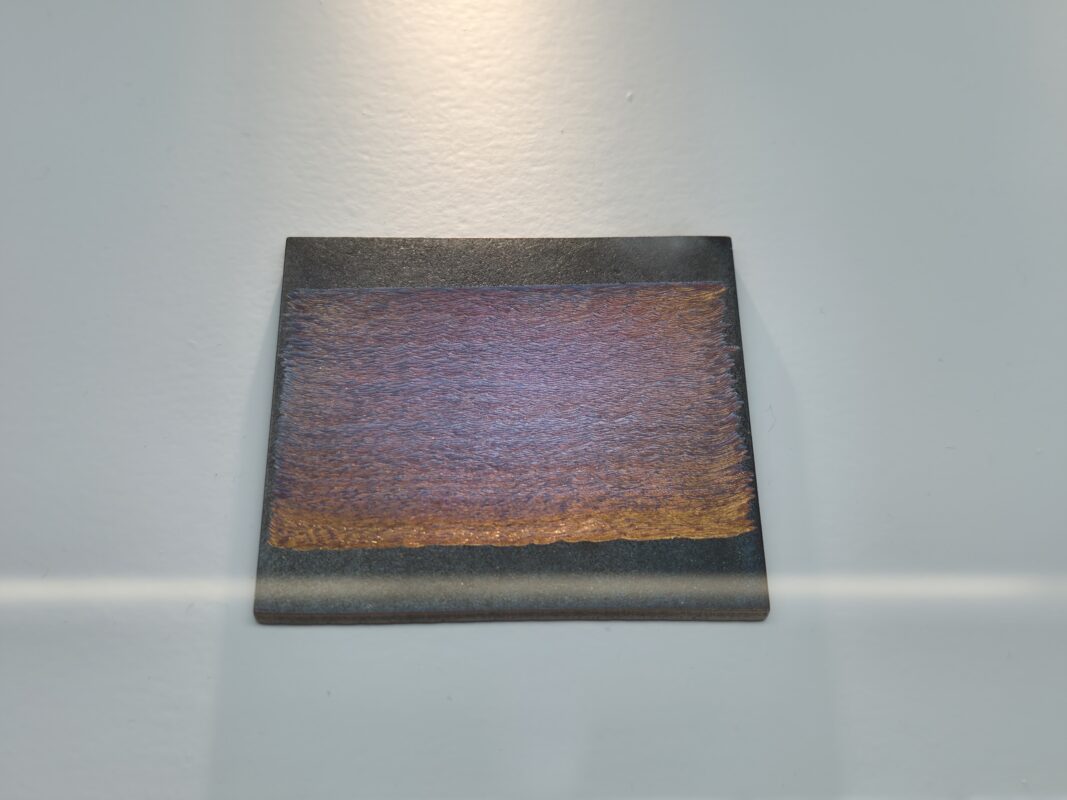
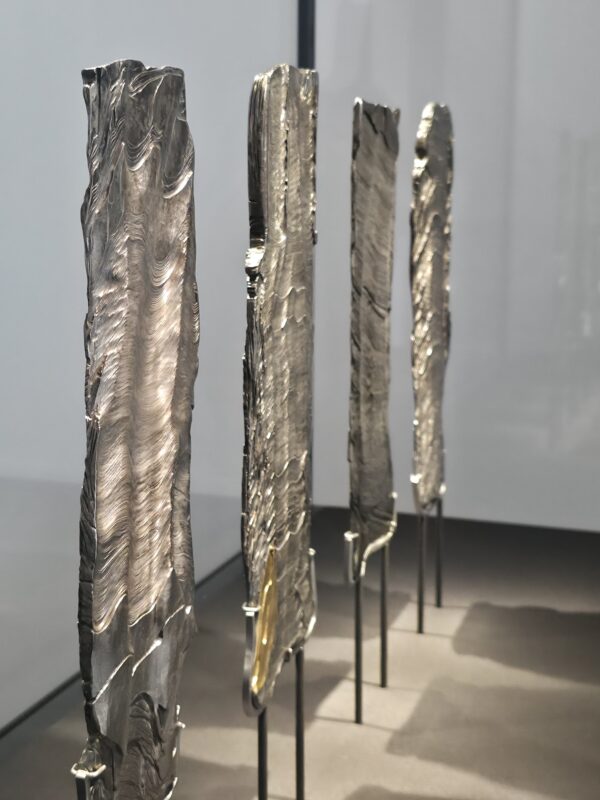
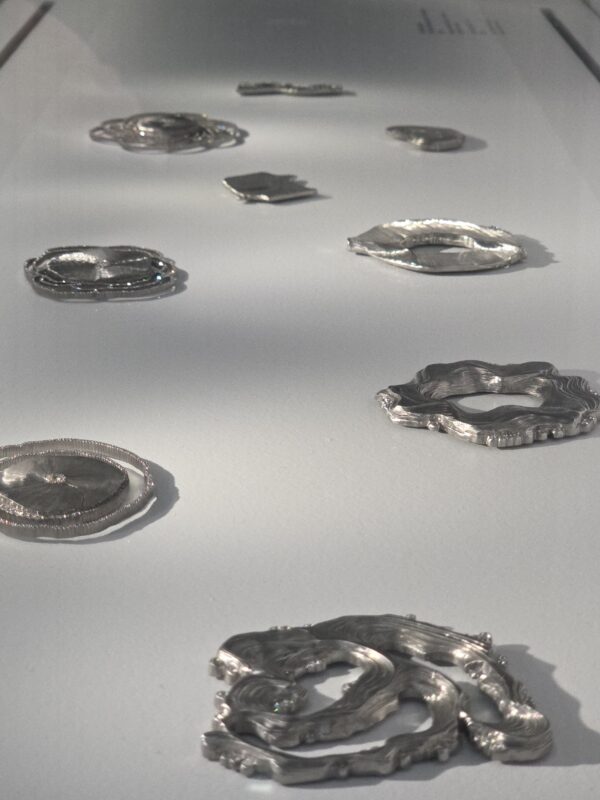
His famous bracelets and necklaces were never conceived as mere ornaments. They are miniature sculptures, intended as much for contemplation as for wearing. Some pieces play with hundreds of small incisions that reflect light almost hypnotically, while others evoke Byzantine mosaics, Eastern calligraphy or Impressionist landscapes. His work converses as much with the decorative arts as with painting or philosophy.
This freedom explains why Daniel Brush holds a special place in the history of contemporary jewellery. He sought neither technical display nor the luxury object. He saw jewellery as a means of reflection, capable of inspiring wonder as much as contemplation. This vision is particularly in tune with L'École, School of Jewelry Arts, which has championed a cultural approach to jewellery far beyond its material value since its foundation.
An exhibition design that gives the works room to breathe
One of this exhibition's great successes lies in its design. True to Daniel Brush's spirit, it avoids spectacular display in favour of a sensitive approach. The deliberately restrained spaces play with volumes, shadows and reflections, allowing each creation to exist fully. The display cases seem almost to disappear, while the lighting reveals the endless variations in the engraved surfaces.
This exhibition design perfectly supports its theme. Light does more than illuminate the works; it becomes one of their materials. Depending on where one stands, the same sculpture changes appearance, a bracelet reveals new details or a flower suddenly seems to come alive. This shifting relationship between object and viewer recalls how Daniel Brush conceived each creation as a living experience, intended to evolve with time and the viewer's perception.
The absence of a chronological route also contributes to this sense of freedom. Visitors make their own way, moving naturally from a painting to a jewel, from a monumental sculpture to a tiny object. This freedom to wander, together with limited visitor numbers, encourages true contemplation, far from the sometimes frenetic pace of major retrospectives.
A rare exhibition
Beyond the beauty of the works, Daniel Brush, the Art of Line and Light is an exceptional event. Many of the pieces on display had never left the artist's studio, and some had simply never been shown to the public. The exhibition thus offers privileged access to a world long kept private, where each object tells as much of a technical feat as of a philosophical reflection on the world.
Daniel Brush, the Art of Line and Light is much more than an exhibition devoted to a jeweller. It is an encounter with an artist who spent his life pushing the limits of matter to better capture the invisible. A welcome invitation to slow down, look differently and rediscover the emotions and questions that a few lines engraved in steel or a few reflections on gold leaf can evoke.
Practical information
– L'École, School of Jewelry Arts, Hôtel de Mercy-Argenteau, 16 bis, boulevard Montmartre, 75009 Paris
– From 8 June to 4 October 2026
– Tuesday to Sunday, 11 am to 7 pm
Late opening on Thursdays until 8:30 pm
Free admission by reservation.