Blog
Zircon: a sparkle of history and a record of the Earth

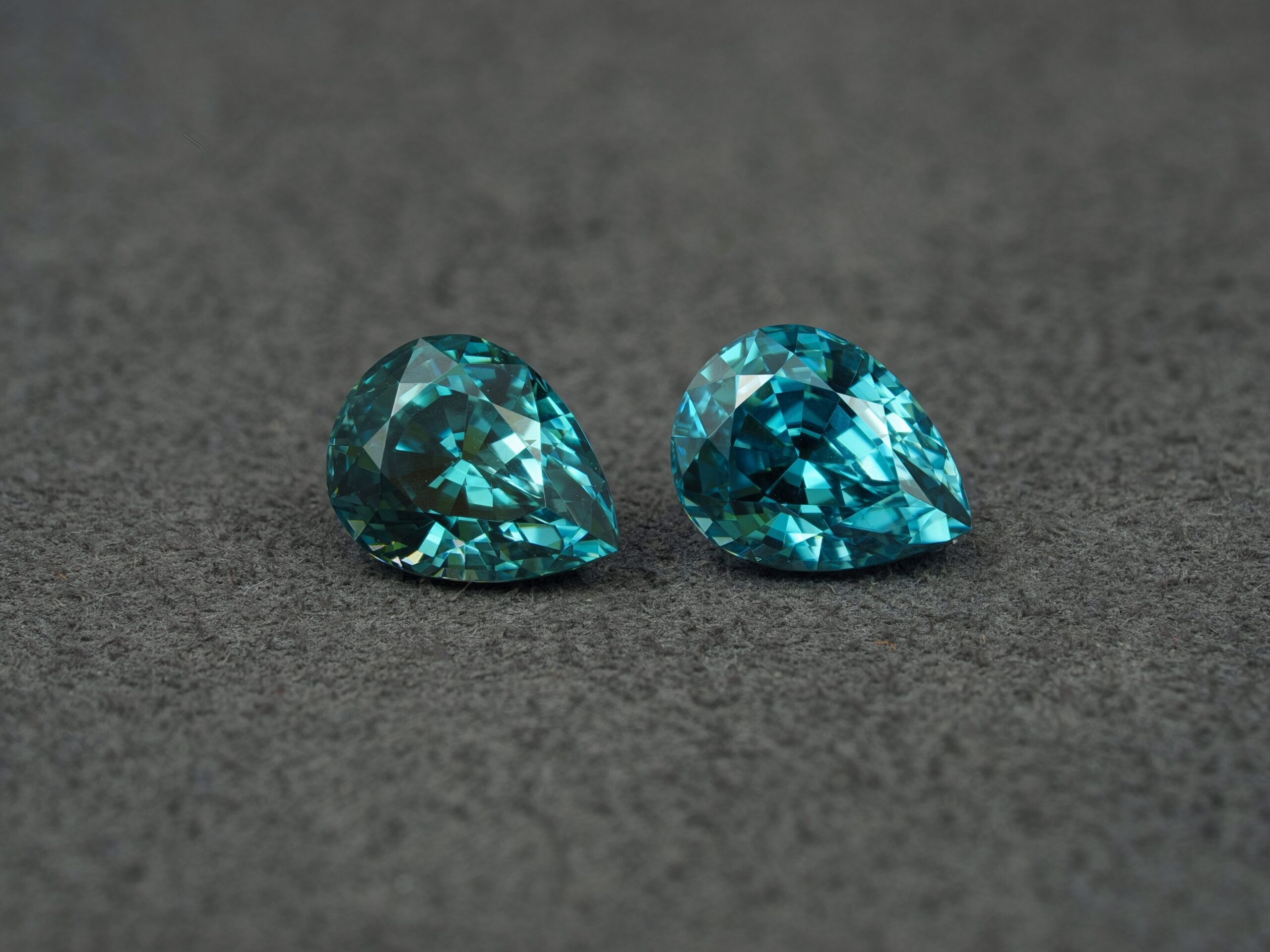
Zircon is a stone that intrigues jewellers and collectors as much as scientists. Often overshadowed by more famous gems such as sapphire or diamond, it nevertheless deserves a place of its own. Behind its shimmering colours and near-diamond (subadamantine) lustre lies a mineral with an exceptional story: zircon is one of the Earth's oldest witnesses. More than an ornamental stone, it is a true archive of our planet, a bridge between beauty and science.
Despite this, zircon is still sometimes misunderstood. Many people continue to associate it with synthetic zirconium oxide, or cubic zirconia (CZ), a synthetic stone that appeared in the 1970s. Yet these two materials have nothing in common: zircon is a natural gemstone billions of years old.
Portrait of an understated gemstone
Zircon belongs to the silicate family (formula ZrSiO₄). It crystallises in the tetragonal system and often forms slender prisms capped by small pyramids. With a hardness of between 6 and 7.5 on the Mohs scale, it is reasonably hard, although it remains vulnerable to knocks and high temperatures.
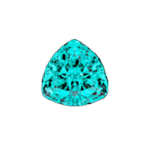
Its greatest charm is its lustre: with a refractive index close to 2, it rivals diamond in brilliance and displays spectacular dispersion, producing unusually intense coloured fire. Some specimens also show pleochroism: the stone reveals different shades depending on the angle, adding to its visual depth.
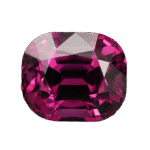
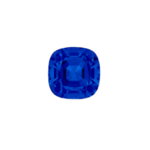
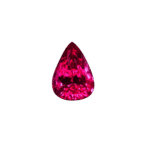
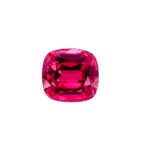
Its colours vary:
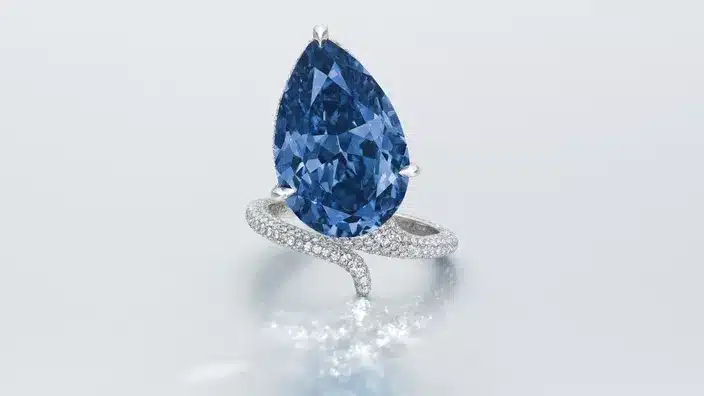
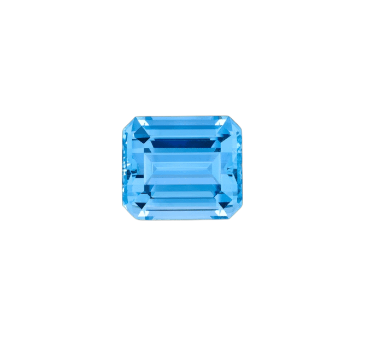
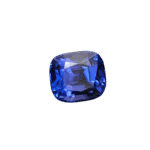
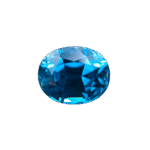
⦁ Blue, the most sought-after shade, often obtained by heating.
⦁ Yellow, orange and brown, the most widespread.
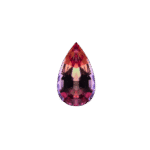
⦁ Red, rare and highly prized.
⦁ Green, also rare, often linked to natural radioactivity.
⦁ Colourless, once nicknamed ‘Matara diamond’ in Sri Lanka because its brilliance so closely resembled diamond.
Some zircons undergo a particular phenomenon: their structure is altered by internal radioactivity (uranium, thorium). These crystals then take on a cloudy, almost glassy appearance and are known as metamict zircons.
Deposits at the edge of time
Zircon is found on every continent, both in igneous rocks and in alluvial deposits, where it accumulates thanks to its high density.
A few sites have become iconic:
⦁ Cambodia (Ratanakiri): famous for its intense blue zircons.
⦁ Sri Lanka: a historic producer, prized since antiquity for its colourless, yellow and orange stones.
⦁ Burma: known for its red and brown zircons.
⦁ Tanzania and Madagascar: modern producers of growing importance.
⦁ Australia (Jack Hills): a unique site where the world's oldest zircons were discovered
The zircons discovered in the Jack Hills region of Australia are among the oldest known minerals, with an estimated age of around 4.4 billion years. Some researchers suggest that their chemical composition could indicate the presence of liquid water and a solid Earth's crust at this very early time. If this hypothesis is correct, it would change our picture of the early Earth. These tiny crystals would then be true witnesses to our planet's first moments.
(Source: Valley et al., Nature Geoscience, 2014)

History
Zircon fascinates more than geologists alone. Since antiquity, it has held a place in the human imagination.
In India and Sri Lanka, it was already cut and worn as an ornamental stone. Sanskrit texts mention it as a protective gem, symbolising wisdom and prosperity.
In medieval Europe, it was credited with mystical powers: it was said to protect against evil, promote sleep and strengthen believers' vital energy. It was even believed to inspire honesty and clarity of mind, qualities echoing its transparency and luminous brilliance.
Throughout the ages, zircon has therefore always been much more than a simple ornament: it carried meaning and symbolism.
Despite its qualities, zircon long suffered from comparison with better-known stones. The arrival of CZ in the 1970s further confused its image, leading the public to believe it was merely a synthetic material.
Today, things are changing. Jewellers are rediscovering its exceptional brilliance and rich colour palette. It rivals the most prestigious stones. Its attractive value for money and the availability of generously sized stones appeal to contemporary designers and knowledgeable collectors.
Beyond its beauty, zircon is a scientific tool of the first order. By trapping small quantities of uranium and thorium, it allows very precise dating using the uranium–lead (U–Pb) method. It has enabled the dating of the oldest fragments of our planet, making zircon an important witness to geological time.
Where other stones tell human stories, zircon tells the story of the Earth itself. It is at once an adornment, an object of belief and a geological archive.
Wearing a zircon is therefore much more than embellishing a piece of jewellery : it means making contact with one of our world's oldest witnesses. Between beauty and memory, zircon is a gemstone now regaining the recognition it deserves.
Bibliography:
- Zircon — Value, Price, and Jewelry Information — Gem Society. For gemmological aspects, marketing, treatments, sought-after colours, etc. International Gem Society
- A 4463 Ma apparent zircon age from the Jack Hills (Western Australia) — Study reporting a detrital zircon from the Jack Hills site dated to approximately 4.463 billion years. pubs.geoscienceworld.org
- A Raman spectroscopic study of zircons on micro-scale and Its significance in explaining the origin of zircons — Bao, Huiming Li, Songnian Lu (2007). Raman differences between igneous and metamorphic zircons, according to the crystal core/rim.
- The Minerageny of Two Groups of Zircons from Plagioclase-Amphibolite of Mayuan Group in Northern Fujian — Bao & Gan (2007). Igneous versus metamorphic origin, chemical zoning, U–Th–Pb. arXiv
- Zircon mineral information, data and localities — Mindat.org. Data on chemistry, crystallography and deposit localities. Mindat
- Zircon — Wikipedia article (English or French version) for general characteristics (formula, crystal system, hardness, specific gravity, pleochroism, etc.). Wikipedia
- Zircon: How this tiny, ancient mineral is upending what scientists believed about early Earth — ACS / Discover Chemistry, 2025. For recent discoveries using zircons as evidence of the Earth's earliest conditions. American Chemical Society
- Titanium in zircon geothermometry — Wikipedia. Using titanium in zircon to estimate crystallisation temperatures. Wikipedia