Blog
Topaz: a gem of science, history and prestige


A gemstone with crystalline hues and sometimes fiery brilliance, topaz holds a special place in the world of gems. Although people often picture a clear blue stone, it comes in a wide variety of colours and forms. Its history, closely linked to imperial jewellery and geology around the world, makes it as iconic as it is little understood.
Origin and mineralogical characteristics
The name topaz is thought to come from the Greek island of Topazios (now Zabargad, in the Red Sea), although this island never produced true topaz; peridotite was mined there instead. The etymology remains uncertain: some see a connection with the Sanskrit word tapas (‘fire’), referring to the stone's luminous brilliance.
Topaz belongs to the group of aluminium and fluorine silicates, with the formula Al₂SiO₄(F,OH)₂. Its orthorhombic structure is distinguished by its clarity and low birefringence, which give it great brilliance. With a hardness of 8 on the Mohs scale, it rivals spinel and corundum, making it a durable gemstone suitable for jewellery.
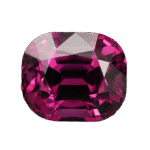
Naturally colourless, topaz gets its colours from impurities in its structure: iron, chromium, titanium or crystal defects caused by natural irradiation. Its shades range from golden yellow to pink, through blue and deep orange.

Topaz in history
Known since antiquity, topaz was long confused with other yellow stones such as citrine or golden beryl (heliodor). The Egyptians attributed a solar origin to it. In medieval Europe, it was counted among the twelve stones of Aaron's breastplate, representing loyalty and fidelity.
It was from the 17th century, however, that topaz became established in European royal treasuries. The discovery of deposits in Brazil radically changed its status: golden and pinkish topazes from Minas Gerais were then regarded as imperial stones. The term Imperial Topaz appeared in the 19th century to describe these gems with an intense pinkish-orange colour.
Certain historic pieces, such as the Portuguese crown jewels, contain Brazilian topazes weighing several hundred carats, illustrating the prestige they embodied in the age of empires.
In Russia, topazes from the Urals were also highly prized. They adorned the imperial family's tiaras and ceremonial sabres, often cut from colourless or bluish crystals. The Hermitage Museum holds several historic specimens whose size and clarity remain unequalled.
In the 20th century, topaz enjoyed renewed interest with the emergence of irradiation treatments that produce intense blue shades. These industrial innovations popularised the stone, making it accessible to a wider public, but also blurred the distinction between rare natural topazes and artificially coloured gems.

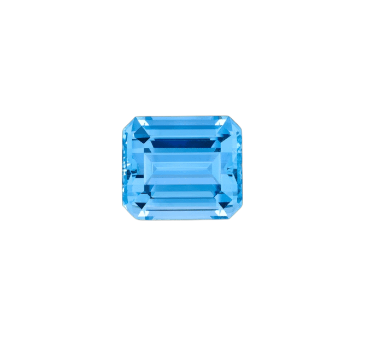
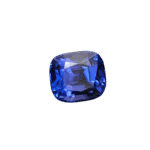
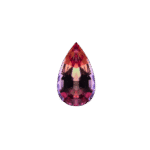
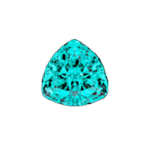
Size: 30 × 15 mm and 21 × 10 mm
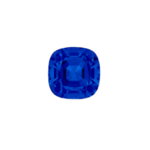
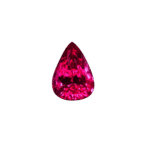
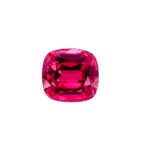
Topaz displays a remarkable diversity of shades:
- Colourless: known as white topaz, often used as a diamond substitute in antique jewellery.
- Golden yellow to honey: colouring caused by iron.
- Pink to orange-red (imperial topaz): rare, mainly from Brazil.
- Blue: highly sought-after, but most blue topazes on the market are produced by irradiating and heating colourless topaz.
- Green, brown, purple: less common shades, often associated with crystal defects.
The main documented treatments are:
- Gamma or electron-beam irradiation, followed by controlled heating, to produce blue shades such as Swiss Blue or London Blue (GIA, 2021).
- Thin coatings applied by vapour deposition, creating iridescent or rainbow effects known as ‘mystic’ topaz (SSEF, 2019).
- Gentle heating of certain natural pink topazes to stabilise their colour (GIA, 2023).
Although accepted on the market, these practices must nevertheless be disclosed.
The major topaz deposits
Topazes form mainly in granitic pegmatites and fluorine-rich hydrothermal cavities. Their geographical distribution is extensive, but a few regions stand out:
- Brazil (Minas Gerais, Ouro Preto, Capão, Antonio Pereira): the main source of imperial topazes in golden, pinkish or orange shades.
- Pakistan (Katlang): pink topazes of exceptional clarity, often compared with those from Brazil.
- Russia (Urals, Murzinka, Ilmen): historic deposits that supplied colourless and bluish topazes of monumental size.
- Sri Lanka: known for its yellow and colourless topazes from alluvial gravels.
- Nigeria and Mozambique: new African sources active since the 2000s, producing golden and colourless topazes.
- Mexico (San Luis Potosí): golden topazes with brownish shades, sometimes used in local jewellery.
Some of these localities also produce remarkable collector's crystals, with distinct prismatic forms, sometimes of enormous size, prized by mineralogists.

Topaz in modern jewellery
Today, topaz is one of the most widely used stones in contemporary jewellery. Affordable and luminous, irradiated blue topazes dominate the market for mass-produced and costume jewellery. In high jewellery, only natural topazes, often accompanied by certificates, are regarded as prestigious stones.
Its hardness and clarity allow complex cuts: brilliant, cushion, pear or trillion. Artisans particularly appreciate its transparency and lustre, which highlight its internal reflections and depth of colour.
On the collectors' market, natural untreated topazes, especially pink or golden examples from Brazil, now command rising prices. Their values are supported by the increasing scarcity of historic deposits and growing demand for stones with certified origins.

Topaz embodies the balance between mineral purity and human intervention. Naturally understated, it has won over the modern world thanks to scientific advances that revealed its full chromatic potential. Its history, marked by confusion and rediscovery, reflects the very development of gemmology: from the fascination of alchemists to the precision of contemporary laboratories.
At the intersection of science, art and history, topaz continues to hold a privileged place in gemmology worldwide, symbolising elegance, transparency and technical mastery.
Bibliography
Topaz: History, Sources and Treatments – GIA, Gems & Gemology – 2023
Imperial Topaz from Ouro Preto, Brazil – SSEF, Facette, June 2022
Natural vs Treated Blue Topaz – GIA Research Notes – 2021
Topaz Properties and Formation – Gemological Institute of America – 2020
Topaz from Katlang, Pakistan – Gem Research Swisslab – 2024
Gemstones of the World – Walter Schumann, 2023 edition
Topaz History and Lore – Smithsonian NMNH – 2024